
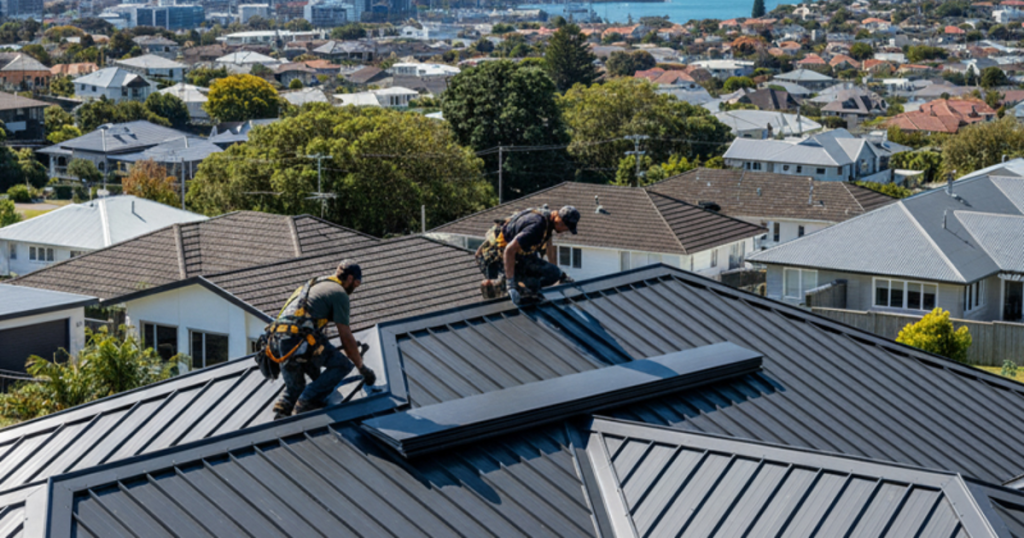
If you are planning a roof replacement, one of the first questions you will probably ask is: how much will it cost? The answer depends on much more than the size of your house. Roof replacement cost can vary depending on the roofing material, roof design, access, existing roof condition, labour and any additional work required during the project.
A professional assessment is the best way to understand what your particular roof needs. Hine Roofing provides new roof installation and re-roofing services across Wellington and Palmerston North, with solutions based on the condition, design and requirements of each property.
Here are nine important factors that can affect the cost of replacing a roof.
1. The Size of Your Roof
The overall roof area is one of the biggest factors affecting roof replacement cost.
A larger roof generally requires more:
- Roofing materials
- Underlay and associated products
- Flashings and fixings
- Labour
- Removal and disposal of the existing roofing
- Time on site
However, roof area is not always the same as the floor area of your house. Roof pitch, overhangs, multiple levels and the shape of the building can all increase the actual roof area.
This is why an accurate site assessment is more useful than estimating the cost based simply on the size of the house.
If you are considering a complete roof replacement, Hine Roofing’s new roof installation service can help you understand what your property requires.
2. The Roofing Material You Choose
Different roofing materials have different purchase, installation and maintenance requirements.
Common options can include:
- Long-run metal roofing
- Corrugated metal roofing
- Concrete or masonry tiles
- Other roofing systems suited to the property
The material you choose can affect both the initial project cost and the long-term maintenance requirements.
For example, BRANZ explains that roofing material selection needs to take into account factors such as roof design, environment, roof pitch and installation. You can read the BRANZ guidance on roof design for more information.
If you are unsure which option is suitable for your property, it is worth discussing the choices with an experienced roofing professional before making a decision.
3. Roof Pitch and Design Complexity
A simple roof with straightforward access is generally easier to work on than a complex roof with multiple valleys, ridges, levels and junctions.
Roof complexity can affect the amount of labour and detailing required.
Your roof replacement may involve additional work around:
- Valleys
- Roof-to-wall junctions
- Skylights
- Chimneys
- Dormers
- Roof penetrations
- Different roof levels
- Flashings and drainage points
These details are important because the roof needs to manage rainwater effectively and remain weather-tight.
New Zealand’s Building Code includes requirements for roofs and other external elements to provide adequate resistance to moisture penetration and accumulation. The Building Performance guidance on E2 External Moisture provides further information.
A complex roof may therefore require more detailed planning and installation than a straightforward roof.
4. Removing and Disposing of the Existing Roof
A roof replacement normally involves removing the existing roofing before the new roof can be installed.
The cost can therefore be affected by:
- Type of existing roofing
- Number of existing layers
- Condition of the old roof
- Ease of removal
- Access to the property
- Disposal requirements
Older roofing may also reveal issues that were not obvious from the outside.
For example, corrosion, damaged timber, deteriorated flashings or problems around roof penetrations may only become clear once the existing roofing has been removed.
BRANZ’s guidance on replacing a profiled metal roof explains that existing roof condition, corrosion, roof design and other factors can influence reroofing work.
This is one reason why a detailed quote should clearly explain what removal and disposal work is included.
5. The Condition of the Roof Structure
Not every roof replacement is simply a matter of removing old roofing and installing new sheets or tiles.
Once the existing roof is inspected, additional work may be required.
Possible issues can include:
- Damaged or deteriorated timber
- Problems with battens or purlins
- Water damage
- Corrosion
- Poor previous repairs
- Inadequate roof drainage
- Damaged flashings
If structural or supporting components require attention, this can increase the overall project cost.
It is better to identify these issues before completing the new roof rather than covering them up and dealing with the problem later.
If your roof has developed localised problems rather than widespread deterioration, professional roof repairs may be an alternative worth discussing.
6. Flashings, Valleys and Roof Penetrations
The roofing surface is only one part of the system.
Areas where the roof meets another structure require careful weatherproofing. These can include chimneys, skylights, walls, valleys, pipes and other penetrations.
These details can add to the overall cost of a replacement roof because they require additional materials, measurements and installation work.
Proper detailing is particularly important in areas exposed to wind-driven rain.
The Building Performance E2 External Moisture requirements provide information about preventing water entry and managing external moisture.
If your roof has several complex junctions, make sure these are included in the quotation rather than treated as an afterthought.
7. Access to the Property
Access can have a significant effect on roofing work.
A property that is easy to access may allow materials, equipment and waste to be moved more efficiently.
Difficult access can occur with:
- Narrow driveways
- Multi-storey homes
- Steep sections
- Limited parking
- Restricted working areas
- Nearby structures
- Difficult material delivery areas
These conditions can increase the time and labour required to complete the job.
This is another reason why an on-site assessment is important when determining your likely roof replacement cost.
A roofing contractor can assess the property and identify access requirements before preparing a detailed quote.
8. Your Property’s Location and Environmental Exposure
Where your property is located can influence roofing requirements.
Homes exposed to strong winds, heavy rainfall or coastal conditions may need roofing materials, fixings and detailing appropriate for the local environment.
BRANZ notes that environmental conditions, roof design, roof pitch, material selection and installation can all influence roof performance. Its guidance on resilient roof design and construction provides useful background.
For properties in exposed areas, choosing a roofing system based purely on the cheapest initial option may not provide the right long-term solution.
The aim should be to choose a roof that is suitable for the building and its environment.
9. Additional Work You May Need at the Same Time
Replacing a roof can be an opportunity to address other roofing issues while the work is already underway.
Depending on the property, you may need to consider:
- Gutter replacement or upgrades
- Roof insulation
- Flashing replacement
- Skylight work
- Roof ventilation
- Repairs to surrounding areas
- Improved drainage
- Replacement of damaged components
Bundling appropriate work together can sometimes be more practical than completing a new roof and then having to disturb it later.
Hine Roofing provides guttering services alongside new roofs and re-roofing. The company’s wider roofing services also include roof repairs, skylights, insulation and other roofing solutions.
Why Two Roof Replacement Quotes Can Be Very Different
It is normal for two roofing quotes to vary, particularly when they are based on different specifications.
One quote may include only the basic roofing material and installation, while another may include:
- Removal of the existing roof
- Disposal
- New underlay
- Flashings
- New fixings
- Repairs to supporting components
- Guttering
- Additional weatherproofing
- Other associated work
Before comparing prices, check that you are comparing similar scopes of work.
A lower price does not necessarily mean you are comparing the same roofing solution.
Ask each contractor what is included in the quote and whether additional work could be required once the existing roof is removed.
Does a New Roof Always Mean the Whole Roof Needs Replacing?
Not necessarily.
Some roofing problems can be addressed through targeted roof repairs, particularly where the main roof structure and roofing material remain in reasonable condition.
However, widespread corrosion, repeated leaks, extensive deterioration or an ageing roofing system may make replacement a more practical long-term option.
Hine Roofing provides both roof repairs and re-roofing, allowing the appropriate solution to be considered based on the condition of the roof.
If you are unsure whether you need repairs or a replacement, arrange a professional roof assessment before making a decision.
How to Get a More Accurate Roof Replacement Cost
The best way to understand your potential roof replacement cost is to arrange an assessment rather than relying on a generic online estimate.
A roofing professional can assess:
- The size and shape of your roof
- Existing roofing material
- Roof pitch and complexity
- Current roof condition
- Flashings and penetrations
- Access requirements
- Environmental exposure
- Removal and disposal requirements
- Any additional work needed
This provides a much clearer picture of what your project actually involves.
A detailed quotation should make it easier to understand exactly what you are paying for and which parts of the project are included.
Choose the Right Roofing Solution for Your Home
A roof is one of the most important parts of your home. It protects the building from rain, wind and other environmental conditions, so replacement should focus on more than the initial price.
New Zealand’s Building Code requirements include provisions for external moisture, while BRANZ provides practical guidance around roof design, materials and replacement. Reviewing these resources can help homeowners understand why correct roofing design and installation matter.
If your roof is old, damaged or showing signs of deterioration, Hine Roofing can assess the existing roof and discuss suitable options for a new roof or re-roofing project.
Need a new roof in Wellington or Palmerston North? Contact Hine Roofing for a free, no-obligation quote.