Wellington’s weather can be tough on any roof. Strong winds sweeping in from Cook Strait, persistent rain, and salty coastal air all take their toll on roofing materials throughout the year. These harsh conditions make roof leaks in Wellington a common issue for both older and newer homes.
At Hine Roofing, we respond to roof leak call-outs across Lower Hutt, Wainuiomata, Wellington City, and surrounding areas every year. Rather than offering temporary fixes, we focus on long-lasting roofing solutions that protect your property from future damage. In this guide, we’ll explain the seven most common causes of roof leaks in Wellington, how they can be repaired, and what you can do to prevent them.
Ignoring a leaking roof can lead to damaged ceilings, mould growth, rotten timber, insulation problems, and expensive structural repairs. Acting early can save you thousands in the long run.
What Makes Roof Leaks in Wellington So Common?
There’s a reason Wellington is known as one of the windiest cities in the world. Wind gusts regularly exceed 90 km/h, while prolonged rainfall and salty sea air constantly expose roofs to moisture and corrosion. Over time, even well-built roofs can begin to show signs of wear if they’re not properly maintained.
Many older properties were built before today’s weathertightness requirements came into force. If your roof no longer complies with the current New Zealand Building Code Clause E2 (External Moisture), it’s far more likely to develop leaks during heavy rain or severe storms.
Homeowners who arrange regular roof inspections and deal with minor issues promptly are far less likely to face costly emergency repairs later on. Regular roof maintenance is the best way to prevent expensive repairs. Follow these practical tips to keep your roof in top condition and reduce the risk of future leaks.
1.Strong Winds Are a Leading Cause of Roof Leaks in Wellington
High winds are one of the leading causes of roof leaks in Wellington. Over time, powerful gusts can loosen fixings, lift corrugated iron or long-run roofing sheets, and create small gaps where rainwater can work its way inside.
After a storm, you may notice damp patches on your ceiling, loose roofing sheets, rust around fixings, or sections of roofing that no longer sit flush. Even a small opening can allow wind-driven rain to enter your roof space.
How We Repair Wind Damage
Our experienced roofers inspect the entire roof to identify loose fixings, lifted sheets, and hidden damage. We replace worn or corroded screws with cyclone-rated fixings fitted with neoprene washers, secure loose roofing sheets, and replace any panels that have been damaged beyond repair.
For homes in particularly exposed coastal or hilltop locations around Wellington, we often recommend upgrading to stronger fixing systems that exceed current New Zealand standards.
Many homeowners also choose to install modern COLORSTEEL® roofing during a re-roof. Designed specifically for New Zealand conditions, it offers outstanding wind resistance, excellent durability, and long-term manufacturer warranties.
2. Faulty or Worn Flashings Let Water In
Flashings play a vital role in keeping your roof watertight. Installed around chimneys, skylights, roof valleys, vents, and where the roof meets a wall, they direct rainwater away from vulnerable areas. However, as flashings age, they can crack, rust, lift, or fail due to poor installation.
In Wellington, strong winds often drive rain underneath damaged flashings, making them one of the most common causes of roof leaks in Wellington. If you’ve spotted water stains beneath a skylight, chimney, or along internal walls, faulty flashing could be to blame.
Signs Your Flashings May Have Failed
- Water stains around chimneys or skylights
- Damp patches near roof-to-wall junctions
- Rusted or loose metal flashings
- Leaks that appear during heavy rain or strong winds
Professional Flashing Repairs
At Hine Roofing, we remove damaged flashings and install high-quality replacements using the correct overlaps, step flashing techniques, and premium weather-resistant materials. Every joint is carefully sealed to provide lasting protection against Wellington’s challenging weather.
Where roofs require more extensive work, we often replace flashings as part of a complete re-roofing project to ensure the entire roofing system complies with current New Zealand Building Code requirements.
Learn more about roofing compliance and flashing requirements:
https://www.building.govt.nz/building-code-compliance/e-moisture/e2-external-moisture/
3. Blocked Gutters and Spouting Cause Water to Overflow
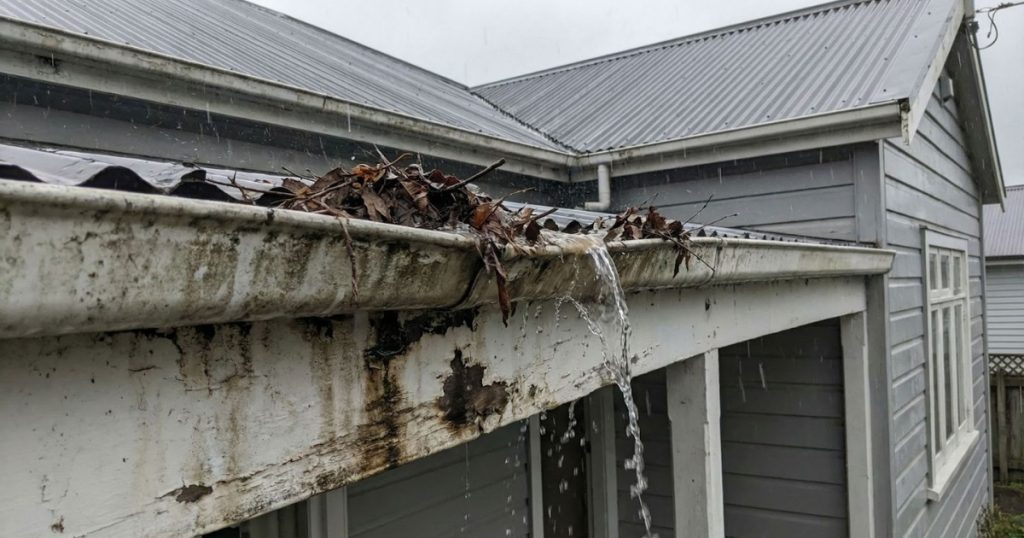
Blocked gutters and spouting are among the easiest roofing problems to prevent, yet they’re responsible for countless roof leaks in Wellington every year. Leaves, moss, twigs, dirt, and other debris quickly build up, especially in leafy suburbs and areas surrounded by mature trees.
When rainwater can’t flow freely through your gutters and downpipes, it begins to overflow. Instead of draining safely away, water backs up beneath roofing sheets or behind fascia boards, eventually finding its way into your ceiling and walls.
Common Signs of Blocked Gutters
- Water spilling over gutters during rainfall
- Damp patches near ceiling edges
- Overflowing downpipes
- Sagging or damaged spouting
- Moss and vegetation growing inside gutters
The Best Way to Prevent Gutter Leaks
Cleaning your gutters at least twice a year—particularly before winter and after autumn—helps prevent costly water damage. Homes surrounded by trees may require more frequent maintenance.
Installing quality gutter guards can also reduce the amount of debris entering your guttering system while improving water flow during heavy rainfall. Downpipes should also be checked regularly to ensure they’re free from blockages and securely fixed.
At Hine Roofing, we provide professional gutter cleaning, gutter repairs, spouting replacement, and preventative maintenance to help keep your roof performing at its best all year round. Where necessary, we also install seamless spouting systems designed to cope with Wellington’s heavy rainfall and windy conditions.
4. Ageing Roofing Materials and Everyday Wear
No roof lasts forever. Over time, roofing materials naturally deteriorate through constant exposure to wind, rain, UV rays, and changing temperatures. In Wellington’s coastal climate, this process can happen much sooner than many homeowners expect.
Older metal roofs may begin to rust, roofing tiles can crack or shift, and membrane roofs may lose their flexibility. Once your roof starts showing signs of age, the likelihood of roof leaks in Wellington increases significantly.
Signs Your Roof May Be Reaching the End of Its Lifespan
- Rust patches or corrosion on metal roofing
- Cracked, broken, or slipped roof tiles
- Loose ridge capping
- Peeling paint or deteriorating roof coatings
- Recurring leaks in different areas
How We Repair Ageing Roofs
Regular roof inspections help identify minor issues before they become costly repairs. Where only a few sections are affected, replacing damaged roofing sheets or tiles can often restore your roof’s performance.
However, if multiple areas are failing, investing in a complete re-roof is usually the most cost-effective long-term solution. Modern long-run steel roofing, such as COLORSTEEL®, is specifically designed to withstand New Zealand’s demanding weather conditions while requiring very little maintenance.
Many homeowners also choose to upgrade insulation during a re-roof, improving energy efficiency and year-round comfort.
5. Poorly Sealed Roof Penetrations
Every roof has openings where pipes, skylights, extractor vents, aerials, or solar panel brackets pass through the roofing material. These penetrations rely on correctly installed flashings and weatherproof seals to keep water out.
As sealants age or flashings deteriorate, even a small gap can allow rainwater to enter your roof cavity. In Wellington, strong winds often force rain sideways beneath poorly sealed penetrations, making them a frequent source of roof leaks in Wellington.
Warning Signs
- Water marks around skylights
- Damp ceilings beneath roof vents
- Leaks after heavy rain
- Cracked or lifting sealant
- Rust around penetration flashings
Professional Repair Solutions
At Hine Roofing, we inspect every roof penetration carefully before carrying out repairs. We replace worn flashings, install new step and counter flashings where required, and apply premium weather-resistant sealants suitable for New Zealand’s climate.
If you’re installing solar panels, extractor fans, or additional roof vents, always use experienced roofing professionals who understand Wellington’s wind zones and current building requirements.
New Zealand Building Code – External Moisture:
https://www.building.govt.nz/building-code-compliance/e-moisture/e2-external-moisture/
6. Salt Air Corrosion and Coastal Exposure
Living near the coast has many advantages, but it also exposes your roof to constant salt-laden air. Salt accelerates corrosion on metal roofing, screws, flashings, and other fixings, particularly in coastal areas around Wellington.
Over time, corrosion weakens roofing materials and creates tiny holes that allow water to penetrate, resulting in persistent roof leaks in Wellington.
Common Signs of Corrosion
- Rust forming around fixings
- Rust streaks running down roofing sheets
- Flaking paint or protective coatings
- Small pinholes in metal roofing
- Corroded flashings or gutters
Protecting Your Roof from Salt Damage
Early treatment is key. Minor corrosion can often be repaired by removing affected sections and applying specialist rust-inhibiting coatings. More advanced corrosion may require replacing damaged roofing sheets or flashings altogether.
For homes close to the coastline, we often recommend upgrading to corrosion-resistant products such as COLORSTEEL® MAXX®, which has been developed specifically for harsh marine environments in New Zealand.
Regular roof washing also helps remove salt deposits and significantly extends the lifespan of your roofing materials.
7. Moss, Lichen and Lack of Regular Roof Maintenance
Moss and lichen may seem harmless, but they trap moisture against your roof and prevent water from draining properly. Over time, this constant dampness can damage roofing materials, encourage corrosion, and shorten the lifespan of your roof.
Without regular maintenance, small issues can quickly develop into expensive roof leaks in Wellington.
Keep Your Roof in Good Condition
- Remove moss and lichen using suitable roof treatments.
- Clear leaves and debris from gutters and valleys.
- Inspect your roof after severe weather.
- Replace damaged fixings before they fail.
- Arrange a professional roof inspection every year.
Installing zinc or copper strips near the roof ridge can also help prevent moss from returning.
At Hine Roofing, our annual roof inspections identify problems before they become costly repairs. We provide detailed condition reports together with practical recommendations to help extend the life of your roof and keep it performing at its best.
Long-Term Prevention Tips for Roof Leaks in Wellington
The best way to avoid costly roof repairs is through regular maintenance and early intervention. A well-maintained roof is far less likely to develop leaks, even in Wellington’s harsh weather conditions. By staying on top of inspections and addressing minor issues promptly, you can extend the life of your roof and protect your home from unnecessary damage.
Arrange Annual Roof Inspections
A professional roof inspection at least once a year—ideally before winter—can identify loose fixings, worn flashings, blocked spouting, corrosion, or damaged roofing materials before they become serious problems.
Keep Gutters and Spouting Clear
Leaves, moss, and debris can quickly block gutters and downpipes, causing water to overflow beneath roofing materials. Cleaning your spouting regularly helps rainwater drain away properly and reduces the risk of leaks.
Invest in Quality Roofing Materials
If your roof is nearing the end of its lifespan, upgrading to premium roofing products designed for New Zealand’s climate can provide greater durability and better protection against wind, rain, and coastal conditions.
Ensure Proper Roof Ventilation
Good roof ventilation reduces condensation in the roof cavity, helping to prevent mould, timber decay, and premature deterioration of roofing materials.
Never Ignore Early Warning Signs
Water stains on ceilings, peeling paint, damp patches, musty smells, or rust around roof fixings often indicate a developing leak. Addressing these issues early is usually far less expensive than repairing major water damage later.
Why Choose a Local Wellington Roofing Specialist?
Choosing a local roofing company means working with professionals who understand Wellington’s unique climate. From strong northerlies and southerlies to heavy rainfall and salt-laden coastal air, local roofers know exactly what your roof is up against and which roofing systems perform best in these conditions.
At Hine Roofing, we’ve built a reputation for delivering dependable roofing services throughout Lower Hutt, Wainuiomata, Wellington City, and surrounding areas. Our experienced team carries out every repair and re-roofing project to current New Zealand building standards, using high-quality materials that are built to last.
Whether you need an emergency roof repair, ongoing maintenance, or a complete roof replacement, we’re committed to providing honest advice, quality workmanship, and fixed-price quotations with no hidden surprises.
Don’t Wait Until a Small Leak Becomes a Major Repair
Even a minor roof leak can quickly lead to damaged ceilings, mould growth, weakened timber framing, insulation problems, and costly structural repairs if left untreated.
If you’ve noticed signs of roof leaks in Wellington, don’t wait for the next storm to make matters worse.
Contact Hine Roofing today for expert roof inspections, reliable roof repairs, and professional re-roofing services across Wellington.
📞 Call us: 0800 45 4463 or 027 771 2354
Areas We Service: Lower Hutt, Wainuiomata, Wellington City, and surrounding suburbs.
Book your free, no-obligation quote today and let our experienced team help keep your home safe, dry, and protected all year round.